
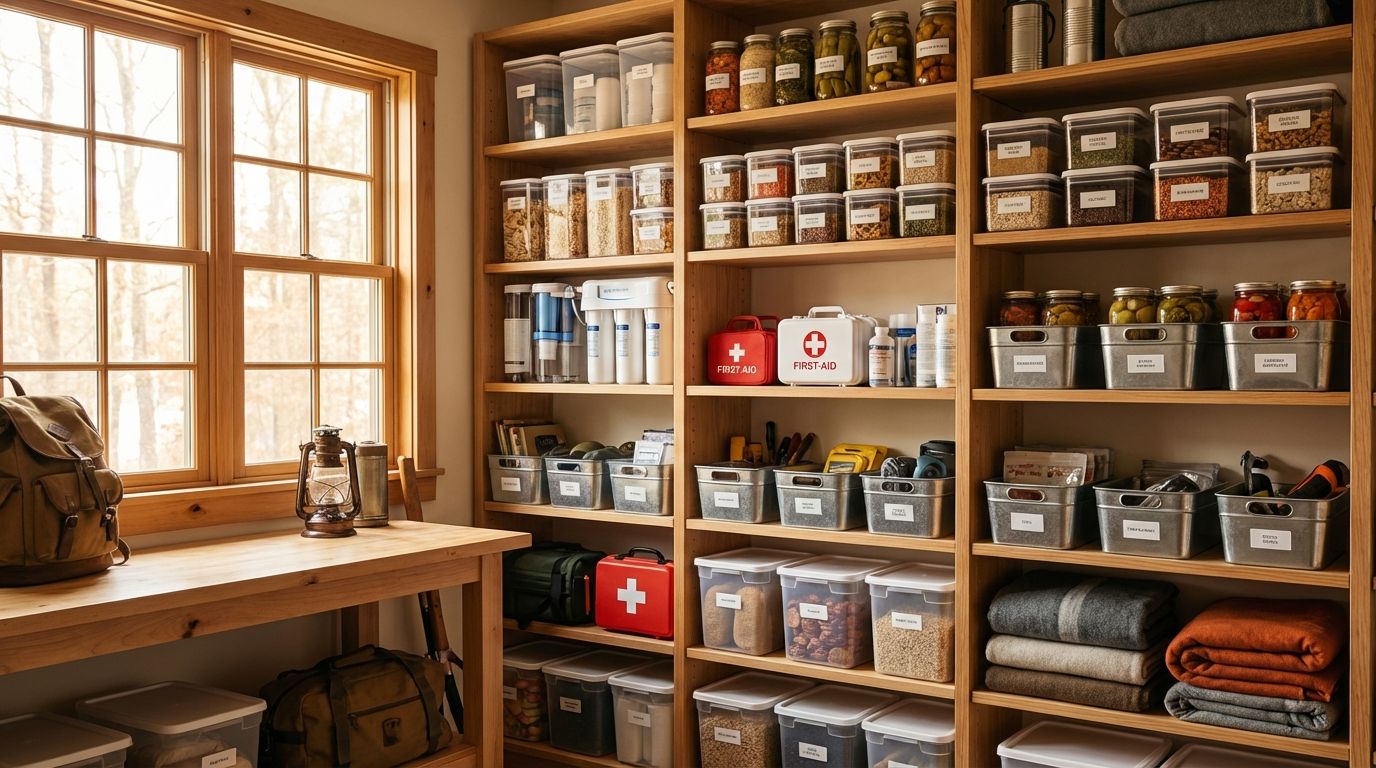
Three guides to get you started.
Printable, practical, no padding — the same thinking Mainstay runs on, ready for the fridge today.
Start here
The 72-Hour Prep Checklist
The exact supplies a household needs to be self-sufficient for three days — printable, organized by category, nothing padded.
Open the guideStay organized
The Household Inventory & Expiration Tracker
A printable workbook for logging what you have, how much, and when it expires — the paper version of the Mainstay app.
Open the guideFor the whole household
Family Emergency Plan Builder
Meeting points, contacts, and roles worked out before you need them — a fill-in plan every member of the family can follow.
Open the guideFree with the newsletter.
Deeper printables, unlocked with your email — you'll get the weekly Field Notes too.
Four checks a year
The Seasonal Readiness Check
A printable four-season checklist — spring, summer, fall, winter — that keeps your whole kit current with a few minutes each season. The rhythm that stops preparedness from ever becoming a project.
Enter your email — we'll unlock the pack and add you to the weekly Field Notes. Unsubscribe anytime.
Not sure where to start? Start here.
Every guide builds on the same baseline — the six categories of a 72-hour kit.
Water
One gallon per person, per day. Three-day minimum.
Food
Ready-to-eat, no cooking needed. Three full days.
Light & power
Flashlight, spare batteries, a way to charge a phone.
First aid
A stocked kit, plus a week of any prescriptions.
Tools & safety
Multi-tool, work gloves, dust masks, a hand-crank radio.
Documents
IDs, insurance, contacts — copies, sealed and dry.
The guides are the start. Field Notes is the habit.
A short, practical preparedness email every week — what to check, what to rotate, what actually matters. No doom, no spam.
Mainstay provides general household-preparedness information and organization tools — not professional emergency, medical, legal, or safety advice. In an emergency, follow the guidance of local authorities and emergency services. For safety standards, verify anything critical against official sources such as FEMA, the National Weather Service, and the American Red Cross.